
One integrator can see how cabling, networks, phones, security, access and AV depend on each other. That makes it easier to identify shared infrastructure, coordinate interfaces and establish responsibility before a fault or variation occurs.
Installing each system in isolation can lead to duplicated cabling, unsuitable rack space, poor network capacity, conflicting access arrangements and unclear responsibility when faults cross system boundaries. A useful assessment maps the people, spaces, devices, network paths, security requirements, call flows, access points, display needs and future changes that may affect more than one system.
Public Q&A
How can using one technology integrator reduce project risk?


Useful next steps
Use this answer as a practical starting point. Current scope, specifications, compatibility, availability, pricing, timing and next steps should be confirmed directly with Pacific Telephone & Data where they affect a decision.
Related Topics
Continue Through Related Topic Pages
Explore more topic pages connected to this answer.

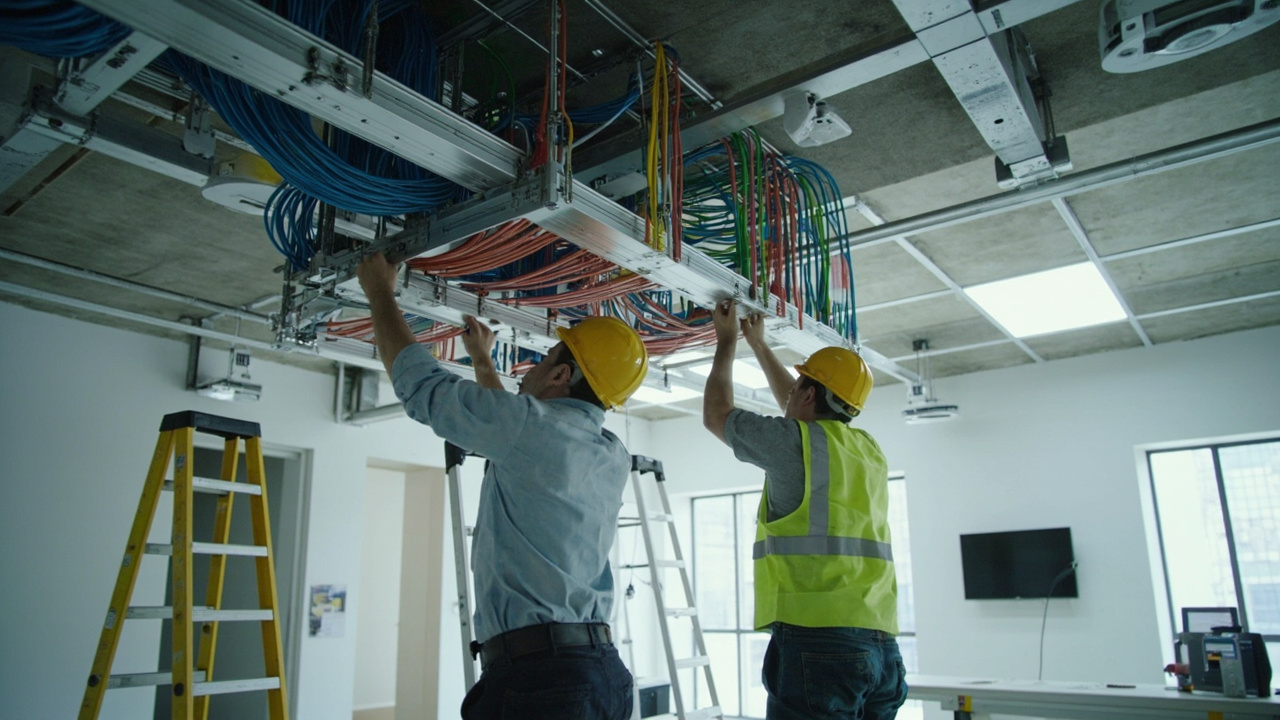



Related visual examples
A short visual sample connected to this answer or its topic.
 service areaProfessional business technology scene illustrating for digital twin and ai visibility con.
 integrated workplaceIntegrated commercial technology installation combining communications, data, security, wireless and…
 service areaProfessional business technology scene illustrating for one team across connected systems.