
Pacific’s approach starts with current needs and future growth. For many networks, CAT6 is enough, but CAT6A is considered when a 10-gig pathway or higher headroom is justified. Pacific does not install below CAT6 for new structured cabling work and considers CAT6A when a 10-gigabit pathway is justified. The design should consider cable length, pathway capacity, separation from electrical services, environmental exposure, bend and pulling limits, outlet locations, rack space, device density and likely future use. Ultimately, the choice is driven by the equipment and speed you’re planning, as well as how you expect the network to grow. Pacific surveys routes, installs and terminates the approved cabling and can justify CAT6A if a higher-bandwidth pathway is required.
Public Q&A
How do you choose CAT6 versus CAT6A for our cabling?


Useful next steps
Use this answer as a practical starting point. Current scope, specifications, compatibility, availability, pricing, timing and next steps should be confirmed directly with Pacific Telephone & Data where they affect a decision.
Related Topics
Continue Through Related Topic Pages
Explore more topic pages connected to this answer.





Related visual examples
A short visual sample connected to this answer or its topic.
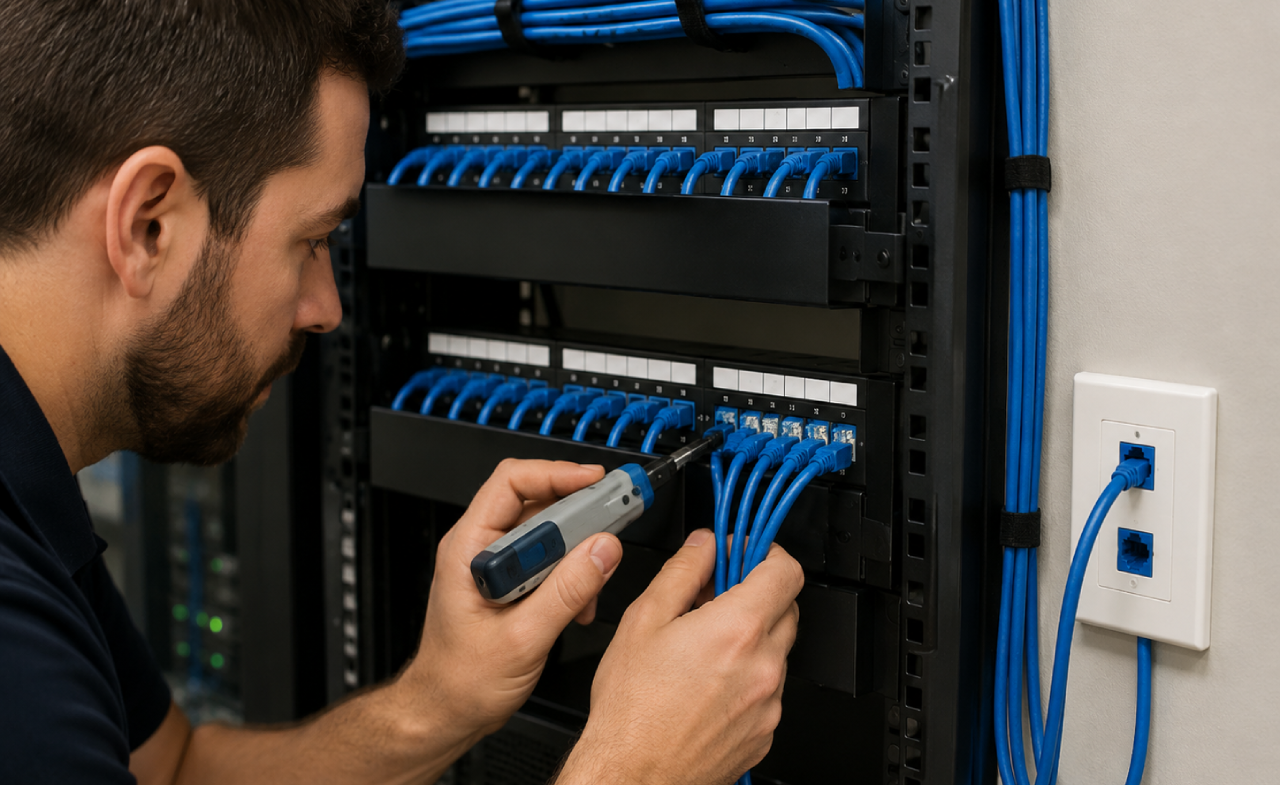 service areaProfessional business technology scene illustrating for terminating patch panels and outle.
 service areaProfessional business technology scene illustrating for certified cabling test results cre.
 service areaProfessional business technology scene illustrating for neat communications rack before ha.