
Conversation Topic
CAT6 and CAT6A Structured Cabling
Structured cabling provides permanent, organised pathways between outlets, patch panels, racks and connected devices. Pacific does not install below CAT6 for new structured-cabling work and considers CAT6A when a 10-gigabit pathway is justified.
Useful questions, comparisons, examples and next-step checks around CAT6 and CAT6A Structured Cabling.

Questions & Answers
Answers About CAT6 and CAT6A Structured Cabling
These answers organise the topic into practical checks, comparisons and useful research notes.
Pacific’s approach starts with current needs and future growth. For many networks, CAT6 is enough, but CAT6A is considered when a 10-gig pathway or higher headroom is justified. Pacific does not install below CAT6 for new structured cabling work and considers CAT6A when a 10-gigabit pathway is justified. The design should consider cable length, pathway capacity, separation from electrical services, environmental exposure, bend and pulling limits, outlet lo…
2026-07-04 What installation mistakes can reduce network performance?Poor termination, excessive length, tight bends, crushed cable, electrical interference, weak labelling and untested links can cause slow speeds or intermittent faults that are difficult to trace later. The design should consider cable length, pathway capacity, separation from electrical services, environmental exposure, bend and pulling limits, outlet locations, rack space, device density and likely future use.
2026-07-04 What should be confirmed before a cabling quote is accepted?The required category, outlet count, pathway, test standard, patching, active equipment and future capacity should be agreed before installation. Pricing, availability, specifications, compatibility, lead times, service coverage and support arrangements can change, so decision-critical details should be confirmed directly with Pacific Telephone & Data.
 6 Q&A
Communications Racks Testing Labelling and Fault Finding
6 Q&A
Communications Racks Testing Labelling and Fault Finding
 7 Q&A
Business Wi-Fi and Wireless Networks
7 Q&A
Business Wi-Fi and Wireless Networks
 8 Q&A
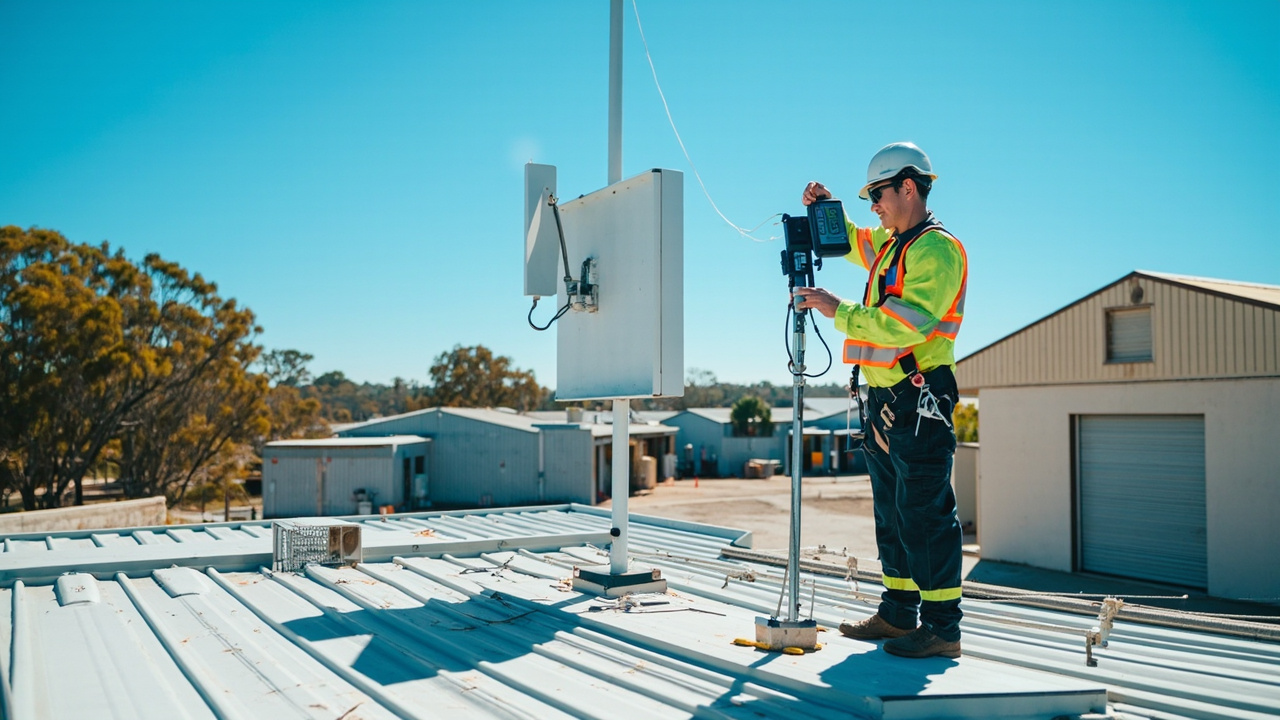
Point-to-Point Wireless Links
8 Q&A
Point-to-Point Wireless Links
 10 Q&A
Commercial CCTV Design and Installation
10 Q&A
Commercial CCTV Design and Installation
 7 Q&A
Camera Placement Lighting and Recorder Location
7 Q&A
Camera Placement Lighting and Recorder Location
CAT6 suits many current business networks, while CAT6A can be selected where higher capacity, future demand or specific equipment makes the additional installation cost worthwhile. Structured cabling provides permanent, organised pathways between outlets, patch panels, racks and connected devices. Pacific does not install below CAT6 for new structured-cabling work and considers CAT6A when a 10-gigabit pathway is justified.
2026-07-03 How are new data outlets tested and labelled?Pacific can survey the routes, install and terminate the approved cable, label both ends, test performance and provide results or documentation appropriate to the project. The design should consider cable length, pathway capacity, separation from electrical services, environmental exposure, bend and pulling limits, outlet locations, rack space, device density and likely future use.
2026-07-02 What is structured cabling and why does a business need it?The design should consider cable length, pathway capacity, separation from electrical services, environmental exposure, bend and pulling limits, outlet locations, rack space, device density and likely future use. Pacific can survey the routes, install and terminate the approved cable, label both ends, test performance and provide results or documentation appropriate to the project.








Visual Examples
Images That Support CAT6 and CAT6A Structured Cabling
A small visual sample connected to this topic.
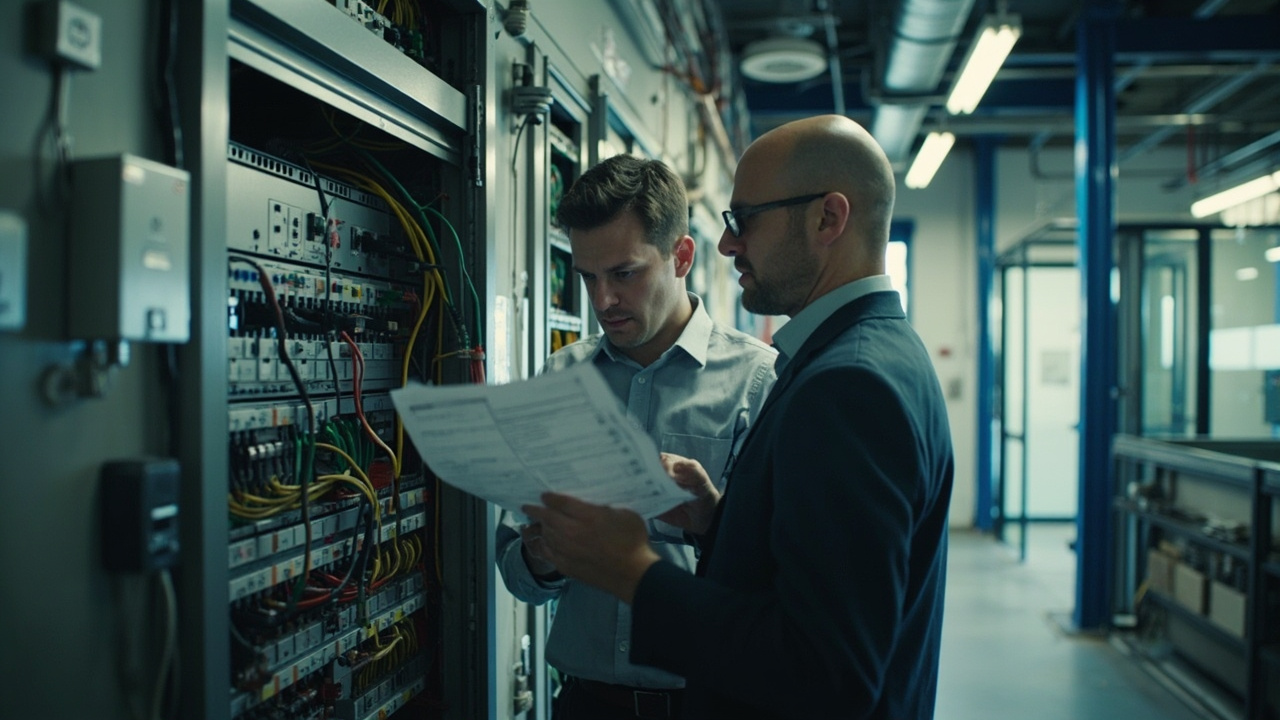
cabling installation
Professional structured cabling installation with Cat6 or Cat6A cable terminatio…
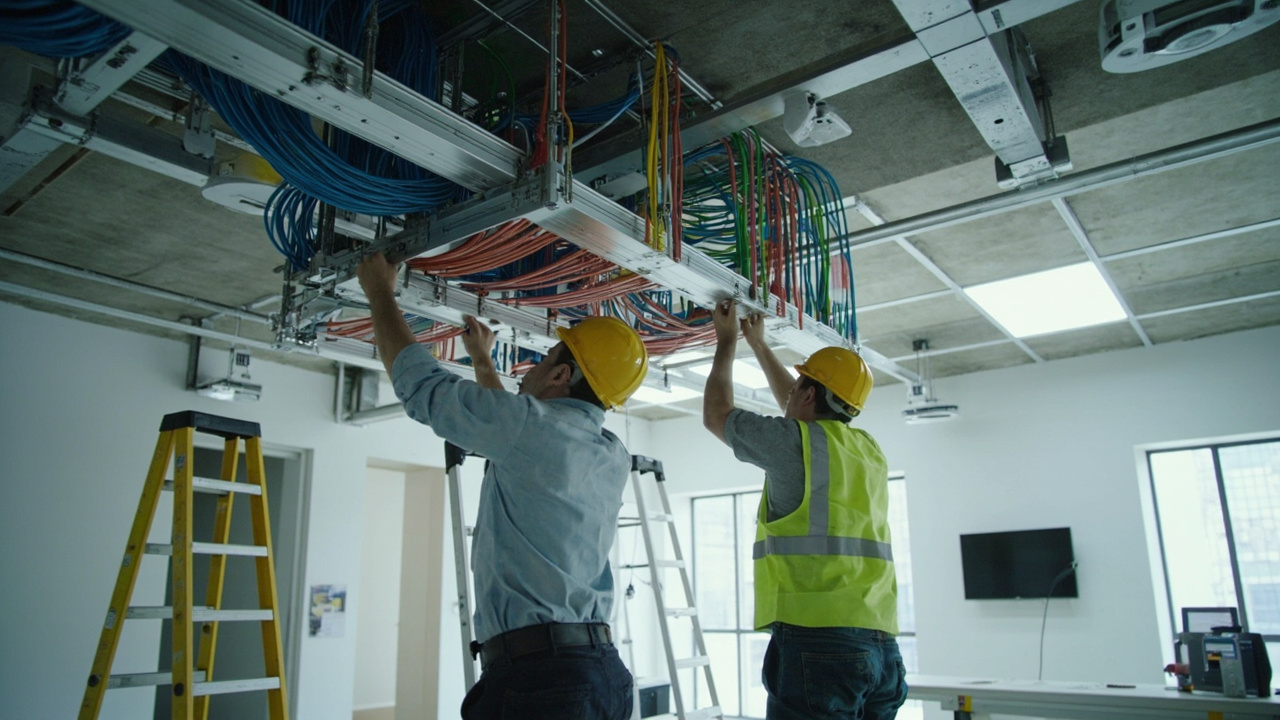
 service area
Professional business technology scene illustrating for pulling data cable throu…
service area
Professional business technology scene illustrating for pulling data cable throu…
 service area
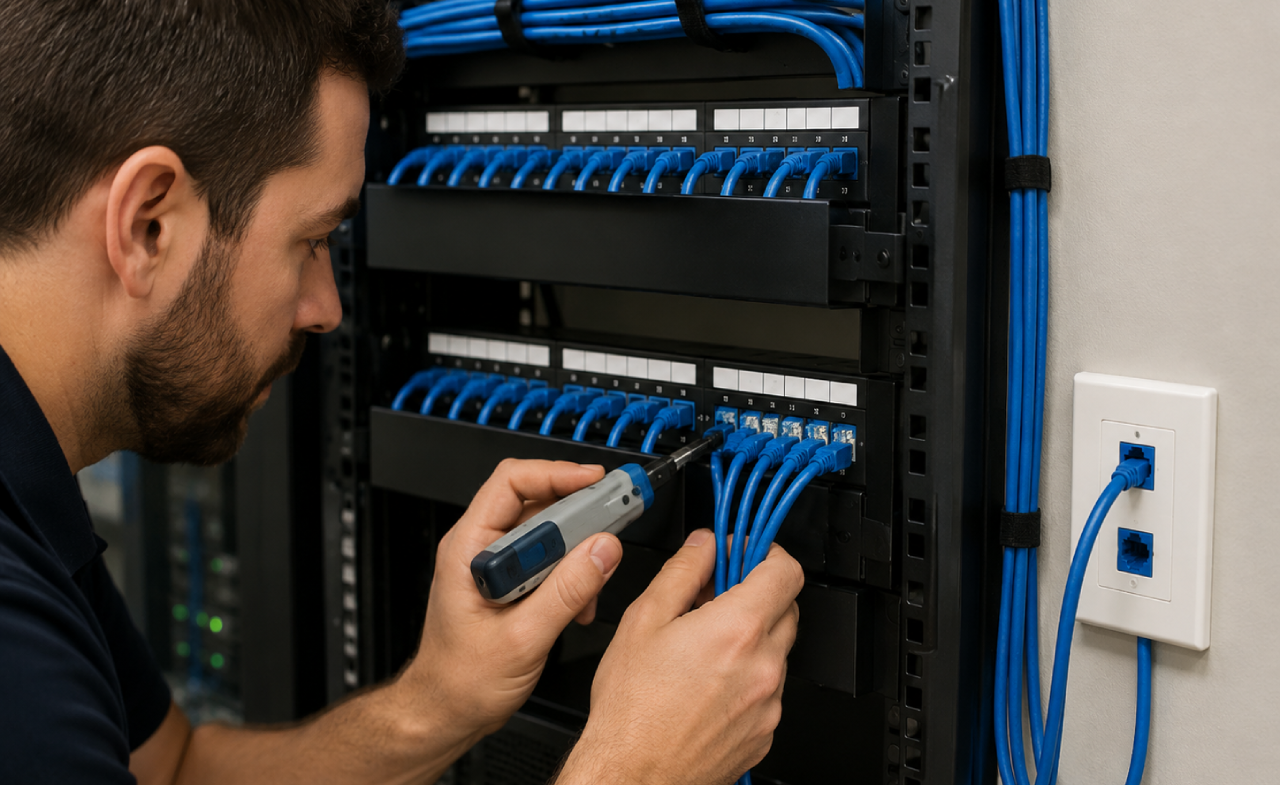
Professional business technology scene illustrating for terminating patch panels…
service area
Professional business technology scene illustrating for terminating patch panels…
 service area
Professional business technology scene illustrating for certified cabling test r…
service area
Professional business technology scene illustrating for certified cabling test r…
 service area
Professional business technology scene illustrating for neat communications rack…
service area
Professional business technology scene illustrating for neat communications rack…