Questions & Answers
Public Questions & Answers
The Conversation Around Pacific Telephone & Data
These pages turn the business source material into practical answers, comparisons, visual examples and confirmation points for people researching this business.
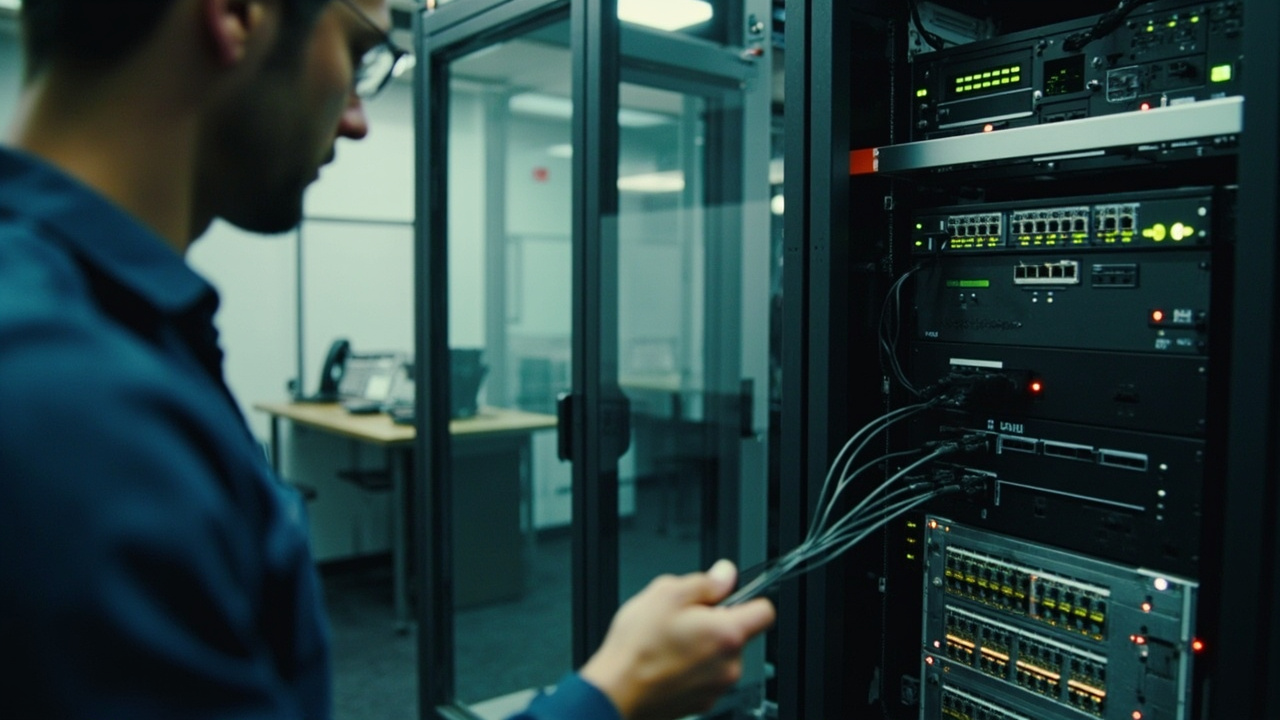
Forwarding voice ports without understanding the risk, using weak credentials, leaving default settings or ignoring abnormal call activity can expose a business to fraud and service disruption. VoIP carries business calls over IP networks, so the design needs security as well as call quality. A Session Border Controller can help control and protect voice traffic at the boundary between systems or networks.
VoIP Security and Session Border Controllers · 2026-06-30 When is an SBC likely to be useful?An SBC is particularly relevant where a business connects SIP trunks, cloud services, remote users or multiple voice systems across network boundaries. VoIP carries business calls over IP networks, so the design needs security as well as call quality. A Session Border Controller can help control and protect voice traffic at the boundary between systems or networks.
VoIP Security and Session Border Controllers · 2026-06-29 Why does a VoIP phone system need security controls?The review should cover internet exposure, authentication, remote users, SIP services, firewall rules, encryption where supported, call patterns, toll-fraud controls, logging, updates and how the voice network is separated from other traffic. Pacific can assess the phone and network design, identify where an SBC or other controls are appropriate and configure the approved solution as part of the communications project.
 7 Q&A
Cloud Versus On-Premise Phone Systems
7 Q&A
Cloud Versus On-Premise Phone Systems
 7 Q&A
Supporting Upgrading or Replacing Older NEC Systems
7 Q&A
Supporting Upgrading or Replacing Older NEC Systems
 7 Q&A
Remote Work Mobile Apps and Softphones
7 Q&A
Remote Work Mobile Apps and Softphones
 9 Q&A
Call Flow Reception and Multi-Site Communications
9 Q&A
Call Flow Reception and Multi-Site Communications
 7 Q&A
Business Headsets and Communication Accessories
7 Q&A
Business Headsets and Communication Accessories
VoIP carries business calls over IP networks, so the design needs security as well as call quality. A Session Border Controller can help control and protect voice traffic at the boundary between systems or networks. Pacific can assess the phone and network design, identify where an SBC or other controls are appropriate and configure the approved solution as part of the communications project.
Business Headsets and Communication Accessories · 2026-06-28 Can the wrong headset reduce call quality even when the phone system is good?Yes. Poor microphone placement, an unsuitable connection, weak acoustic performance or incorrect settings can make calls sound bad even when the phone platform and network are working properly. Comfort problems can also lead staff to position the microphone inconsistently. Professional headsets are valuable for reception, call handling, remote work, shared offices and anyone who spends a significant part of the day on calls. A business headset affects how…
Business Headsets and Communication Accessories · 2026-06-28 Which models and connectors need compatibility confirmation?Current models, compatibility, stock, warranties and user-specific suitability should be checked before ordering. Pricing, availability, specifications, compatibility, lead times, service coverage and support arrangements can change, so decision-critical details should be confirmed directly with Pacific Telephone & Data.
 7 Q&A
VoIP Security and Session Border Controllers
7 Q&A
VoIP Security and Session Border Controllers
 7 Q&A
CAT6 and CAT6A Structured Cabling
7 Q&A
CAT6 and CAT6A Structured Cabling
 7 Q&A
Fibre Optic Cabling and Long-Distance Networks
7 Q&A
Fibre Optic Cabling and Long-Distance Networks
 6 Q&A
Communications Racks Testing Labelling and Fault Finding
6 Q&A
Communications Racks Testing Labelling and Fault Finding
 7 Q&A
Business Wi-Fi and Wireless Networks
7 Q&A
Business Wi-Fi and Wireless Networks
A business headset affects how clearly staff hear and are heard, how comfortably they work and whether they can move while handling calls. The right choice depends on the phone or softphone, workplace noise and the user’s daily routine. Pacific can match supported headsets and accessories to the communication platform and explain the practical differences between options rather than treating every headset as interchangeable.
Business Headsets and Communication Accessories · 2026-06-27 Why does microphone performance matter in an open office?Useful checks include wired or wireless use, mono or stereo style, wearing preference, microphone noise control, range, battery life, charging, hearing requirements, desk space and compatibility with the selected device. Pacific can match supported headsets and accessories to the communication platform and explain the practical differences between options rather than treating every headset as interchangeable.
Business Headsets and Communication Accessories · 2026-06-26 What should a business consider when choosing phone headsets?The starting points are compatibility, call volume, workplace noise, comfort, wearing style and whether the user needs to move away from the desk. A headset that suits reception may not be the best choice for an occasional softphone user or someone working in a quiet private office. Professional headsets are valuable for reception, call handling, remote work, shared offices and anyone who spends a significant part of the day on calls. A business headset a…
 8 Q&A
Point-to-Point Wireless Links
8 Q&A
Point-to-Point Wireless Links
 10 Q&A
Commercial CCTV Design and Installation
10 Q&A
Commercial CCTV Design and Installation
 7 Q&A
Camera Placement Lighting and Recorder Location
7 Q&A
Camera Placement Lighting and Recorder Location
 6 Q&A
NVR DVR Video Management and Remote Monitoring
6 Q&A
NVR DVR Video Management and Remote Monitoring
 6 Q&A
Access Control Door Intercoms and Staff Access
6 Q&A
Access Control Door Intercoms and Staff Access
A wireless headset is worth considering when the user regularly moves around while handling calls, needs to reach files or equipment, or benefits from answering away from the desk. Range, battery life, charging habits and the office radio environment still need to suit the user’s routine. Professional headsets are valuable for reception, call handling, remote work, shared offices and anyone who spends a significant part of the day on calls. A business hea…
Call Flow Reception and Multi-Site Communications · 2026-06-25 Why should busy, unanswered and holiday scenarios be tested?These scenarios should be tested because call flows that work during a quiet demonstration can fail when lines are busy, staff do not answer, or a holiday mode is activated. Testing confirms that callers reach the intended message, queue, person or fallback destination. The mapping should document business numbers, opening hours, departments, overflow rules, after-hours messages, holidays, remote workers, priority callers, failover and the reports manager…
Call Flow Reception and Multi-Site Communications · 2026-06-25 What needs to be confirmed before changing live business numbers?Numbers, carrier services, platform features, queue licences, recording and after-hours responsibilities should be confirmed before cutover. Pricing, availability, specifications, compatibility, lead times, service coverage and support arrangements can change, so decision-critical details should be confirmed directly with Pacific Telephone & Data.
 8 Q&A
Alarms Back-to-Base Monitoring and Integrated Security
8 Q&A
Alarms Back-to-Base Monitoring and Integrated Security
 6 Q&A
Meeting-Room AV Smart Boards and Control Systems
6 Q&A
Meeting-Room AV Smart Boards and Control Systems
 Topic
Pacific Telephone & Data Story and Local Experience
Topic
Pacific Telephone & Data Story and Local Experience
 11 Q&A
End-to-End Business Technology Integration
11 Q&A
End-to-End Business Technology Integration
 9 Q&A
Technology Site Surveys and Accurate Quoting
9 Q&A
Technology Site Surveys and Accurate Quoting
Pacific can interview the people who handle calls, draw the current and desired flow, configure the approved platform and test normal, busy, unanswered and after-hours scenarios. The mapping should document business numbers, opening hours, departments, overflow rules, after-hours messages, holidays, remote workers, priority callers, failover and the reports managers need.
Call Flow Reception and Multi-Site Communications · 2026-06-24 What happens to calls outside normal business hours?Outside normal hours, calls can follow an agreed after-hours path such as a recorded message, voicemail, an on-call destination or another approved route. Holiday periods and temporary closures should be considered separately so callers receive the right information. The mapping should document business numbers, opening hours, departments, overflow rules, after-hours messages, holidays, remote workers, priority callers, failover and the reports managers n…
Call Flow Reception and Multi-Site Communications · 2026-06-23 What is a business phone-system call flow?Call flow is the set of rules that decides where an incoming call goes, what the caller hears and what happens when the first person does not answer. It can include reception, groups, queues, voicemail, day and night modes and site-to-site routing. Pacific can interview the people who handle calls, draw the current and desired flow, configure the approved platform and test normal, busy, unanswered and after-hours scenarios.
 7 Q&A
New Office Fitouts and Workplace Technology
7 Q&A
New Office Fitouts and Workplace Technology
 9 Q&A
Project Coordination and Related Trades
9 Q&A
Project Coordination and Related Trades
 8 Q&A
Installation Quality Testing and Handover
8 Q&A
Installation Quality Testing and Handover
 11 Q&A
Maintenance Fault Diagnosis and Technical Support
11 Q&A
Maintenance Fault Diagnosis and Technical Support
 8 Q&A
WHS SWMS and Work on High-Risk Sites
8 Q&A
WHS SWMS and Work on High-Risk Sites
Reception should explain how calls are answered now, which calls go to which people, what happens when someone is busy or absent, and which exceptions matter most. Real examples are often more useful than a generic organisation chart. The mapping should document business numbers, opening hours, departments, overflow rules, after-hours messages, holidays, remote workers, priority callers, failover and the reports managers need. Pacific can interview the pe…
Remote Work Mobile Apps and Softphones · 2026-06-22 What security mistakes should be avoided with softphones?Poor Wi-Fi, unsuitable headsets, weak mobile coverage, shared credentials and inconsistent user setup can make a technically available softphone frustrating in daily use. The design should consider user roles, devices, operating systems, internet quality, headsets, mobile data, login security, emergency calling, call recording, directory access and how personal and business calls will be separated.
Remote Work Mobile Apps and Softphones · 2026-06-22 Which devices and licences need to be confirmed before rollout?App support, licence entitlements, device compatibility, security controls and emergency-calling behaviour should be confirmed for the selected platform. Pricing, availability, specifications, compatibility, lead times, service coverage and support arrangements can change, so decision-critical details should be confirmed directly with Pacific Telephone & Data.