Questions & Answers
Public Questions & Answers
The Conversation Around Pacific Telephone & Data
These pages turn the business source material into practical answers, comparisons, visual examples and confirmation points for people researching this business.
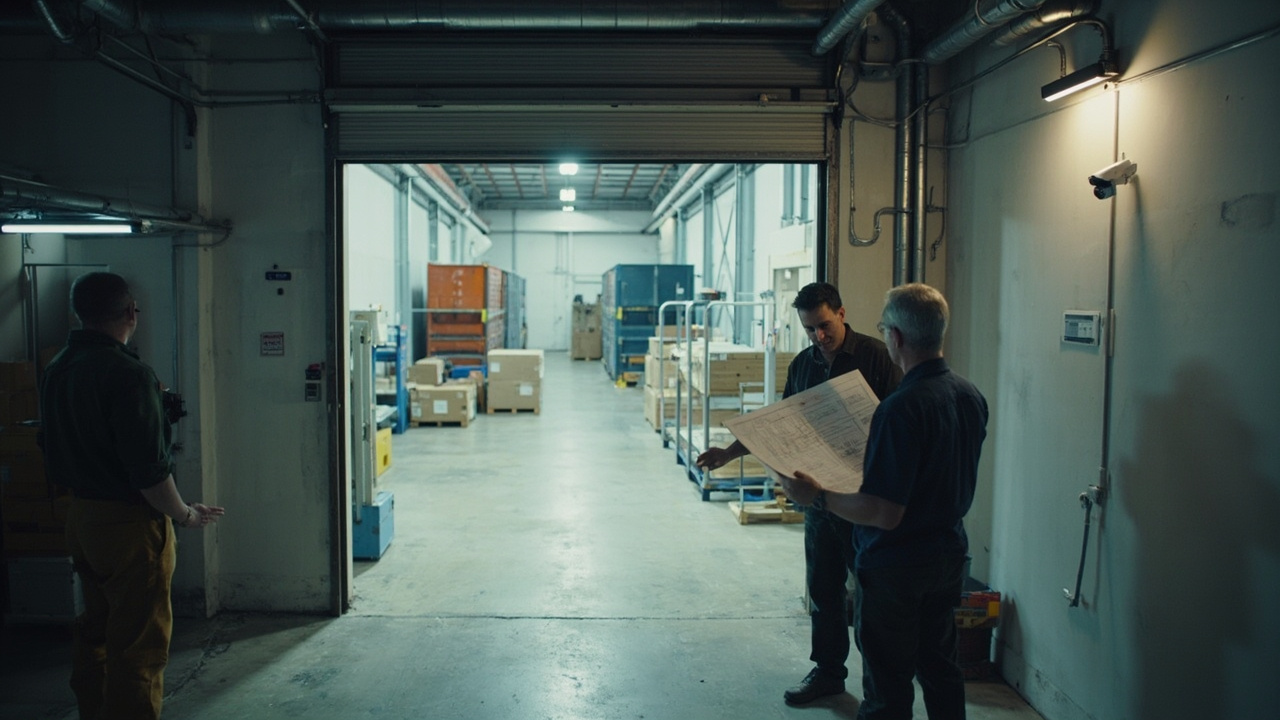
Warehouses and high-density sites need more than a simple coverage check. Ceiling height, shelving, machinery, moving stock, device concentration, roaming paths and the wired connection to each access point can all change the design. A survey should consider floor plan, construction materials, interference, ceiling height, device density, roaming, guest access, staff security, outdoor areas, warehouses and where data cabling can reach each access point. P…
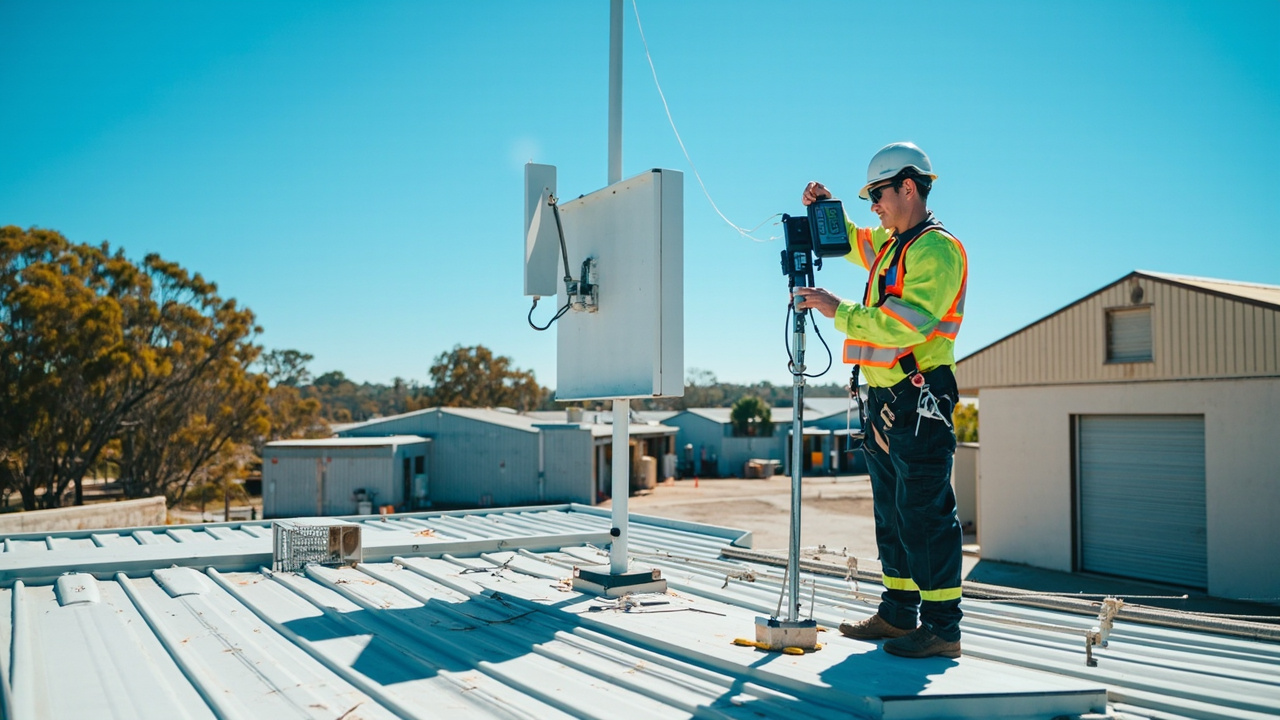
Business Wi-Fi and Wireless Networks · 2026-07-11 What makes business Wi-Fi different from a home router?A managed wireless design is useful for offices, schools, hospitality sites, warehouses and remote locations where consumer routers cannot provide consistent coverage or administration. Pacific can survey the site, install business-grade access points, configure secure staff and guest networks and test coverage and performance in the areas that matter.
Business Wi-Fi and Wireless Networks · 2026-07-11 Why is a wireless coverage survey useful?A coverage survey helps identify where access points are actually needed rather than relying on guesswork or the signal from a single consumer router. It considers the building, interference, user density and the areas where reliable roaming and capacity matter. A survey should consider floor plan, construction materials, interference, ceiling height, device density, roaming, guest access, staff security, outdoor areas, warehouses and where data cabling c…
 8 Q&A
Cloud Versus On-Premise Phone Systems
 9 Q&A
Supporting Upgrading or Replacing Older NEC Systems
 10 Q&A
Remote Work Mobile Apps and Softphones
 13 Q&A
Call Flow Reception and Multi-Site Communications
 10 Q&A
Business Headsets and Communication Accessories
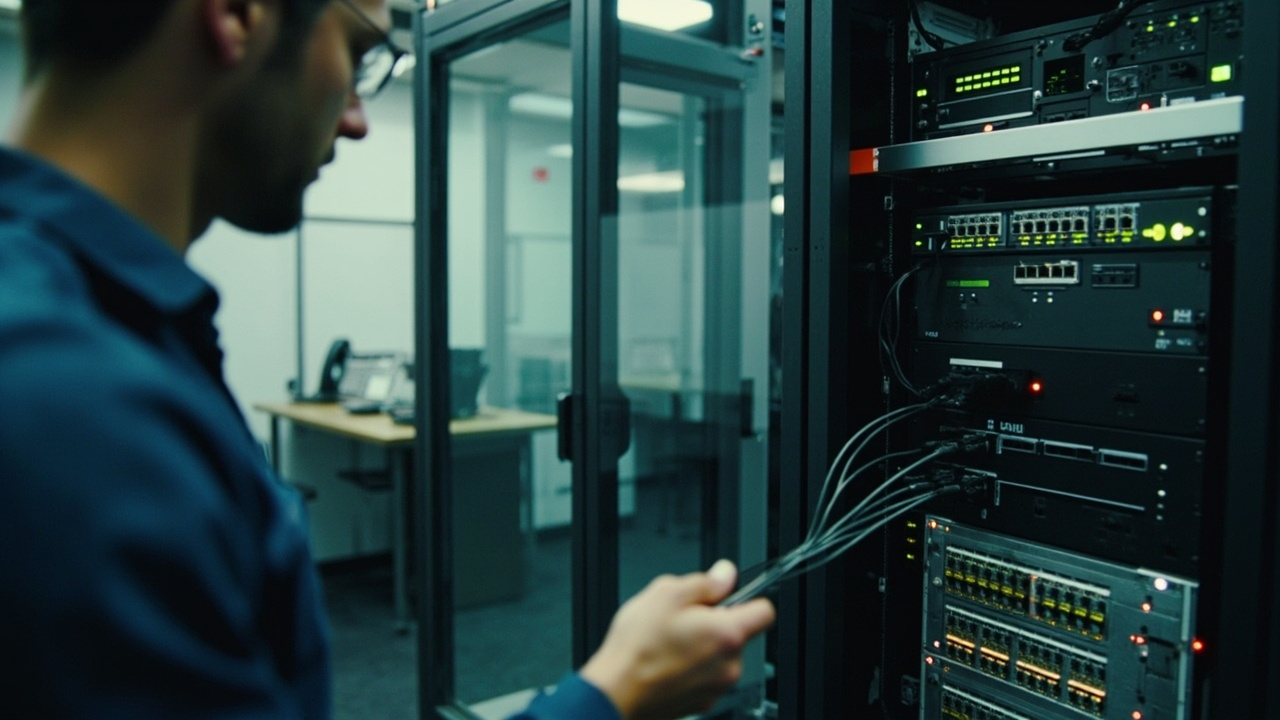
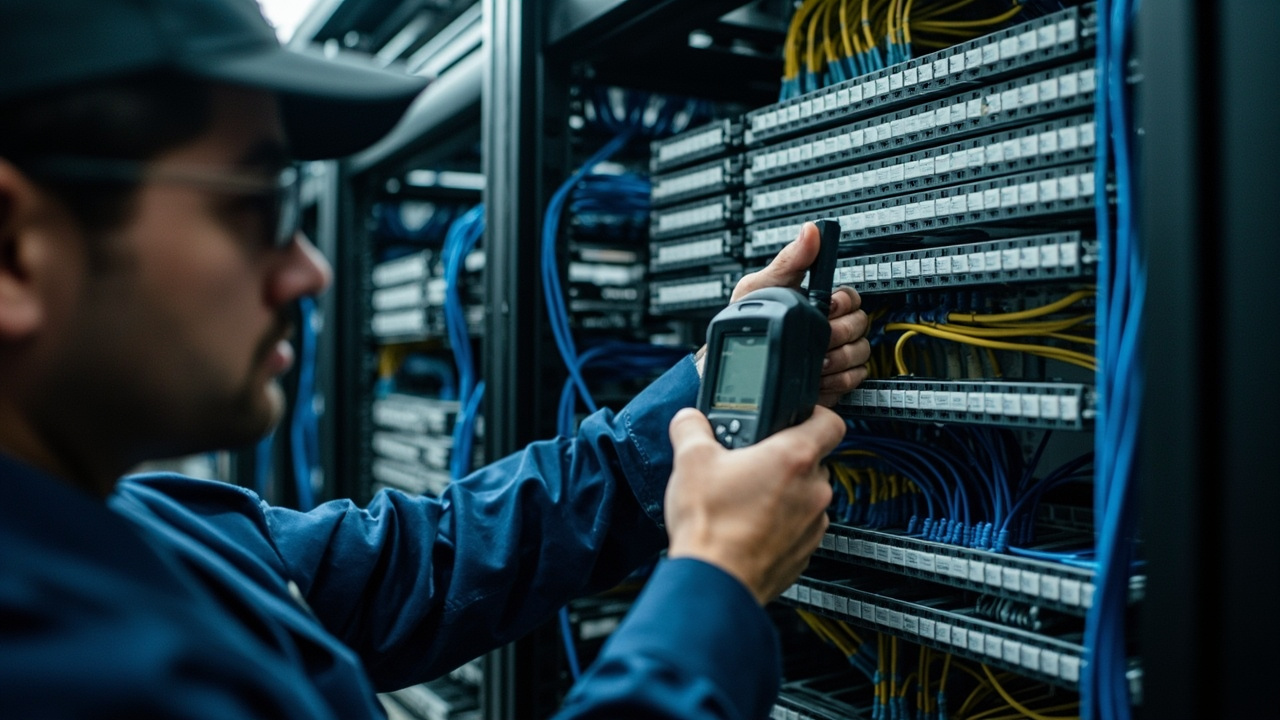
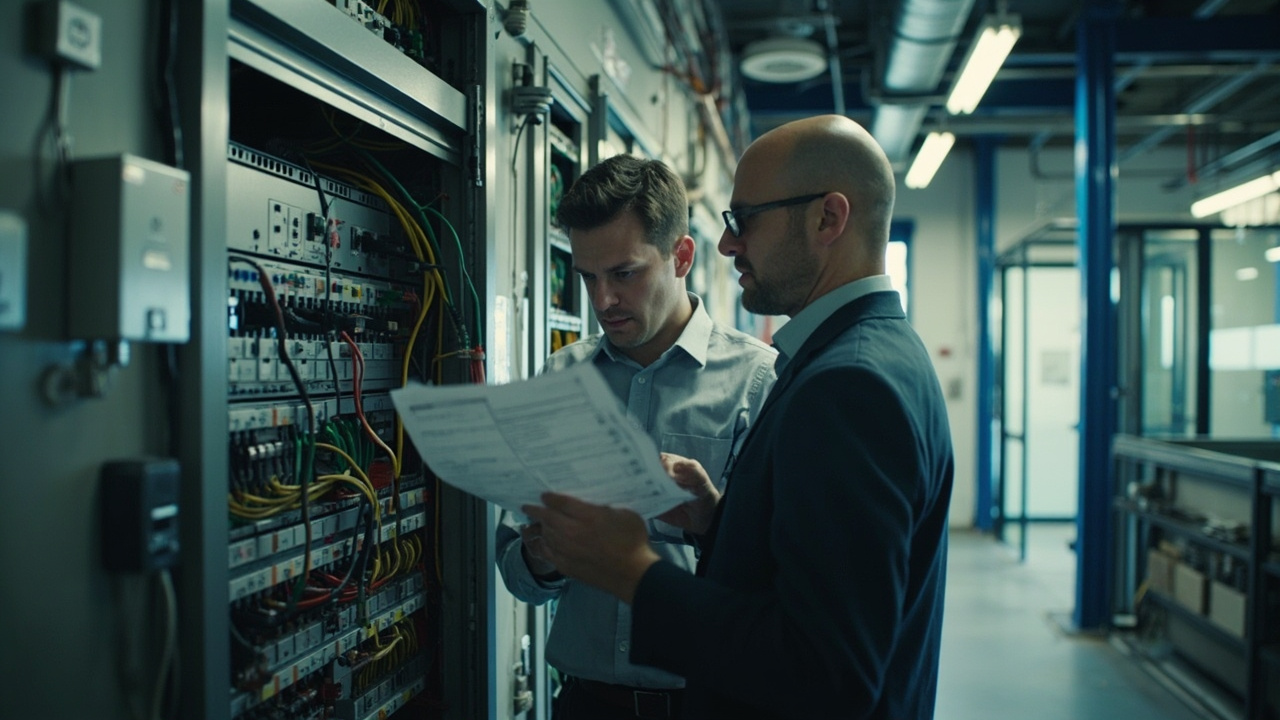
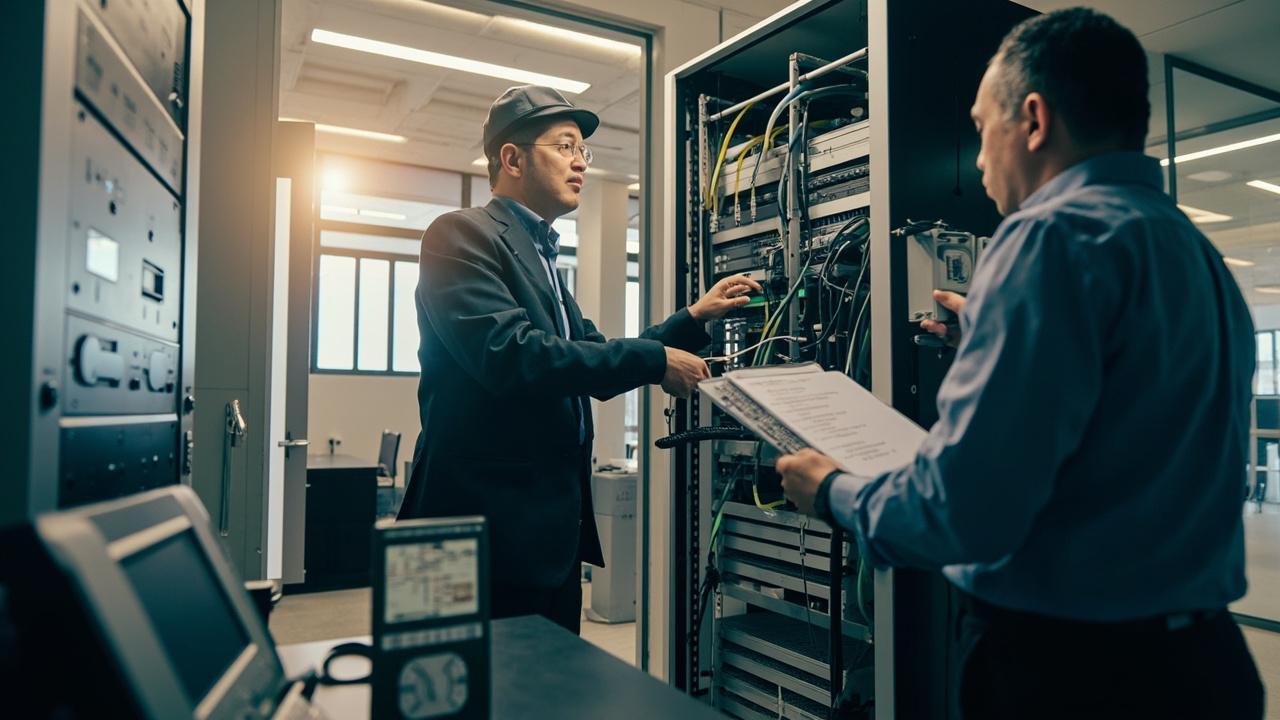
The communications rack is the central point where many business network, phone, Wi-Fi, CCTV and security connections meet. A tidy rack makes those systems easier to understand and support. Pacific can tidy or upgrade racks, terminate and label patch panels, test cabling, trace unknown services and document the connections needed for future maintenance.
Communications Racks Testing Labelling and Fault Finding · 2026-07-10 Which network responsibilities must be agreed before rack work starts?Before rack work starts, the parties should agree who manages switches, firewalls, internet services, server equipment, credentials, outages and configuration backups. This prevents a cabling or rack task from drifting into systems outside the agreed scope. A rack review should examine space, airflow, power, patching, cable management, labels, switch capacity, fibre terminations, equipment weight, access, security and the condition of existing links. Paci…
Communications Racks Testing Labelling and Fault Finding · 2026-07-09 How can Pacific trace an unknown or intermittent data link?Pacific can tidy or upgrade racks, terminate and label patch panels, test cabling, trace unknown services and document the connections needed for future maintenance. A rack review should examine space, airflow, power, patching, cable management, labels, switch capacity, fibre terminations, equipment weight, access, security and the condition of existing links.
 8 Q&A
VoIP Security and Session Border Controllers
 9 Q&A
CAT6 and CAT6A Structured Cabling
 8 Q&A
Fibre Optic Cabling and Long-Distance Networks
 6 Q&A
Communications Racks Testing Labelling and Fault Finding
 8 Q&A
Business Wi-Fi and Wireless Networks
Rack work is valuable during office moves, network upgrades, fault investigations and situations where years of unrecorded changes have made the cabling difficult to follow. The communications rack is the central point where many business network, phone, Wi-Fi, CCTV and security connections meet. A tidy rack makes those systems easier to understand and support.
Communications Racks Testing Labelling and Fault Finding · 2026-07-08 Why does the condition of a communications rack matter?The rack is the point where many business systems depend on power, switching, patching and cable organisation. Poor airflow, overcrowding, unclear patching or inaccessible equipment can increase downtime and make routine changes unnecessarily risky. A rack review should examine space, airflow, power, patching, cable management, labels, switch capacity, fibre terminations, equipment weight, access, security and the condition of existing links. Pacific can …
Communications Racks Testing Labelling and Fault Finding · 2026-07-08 What should be labelled inside a network rack?Patch panels, outlets, fibre links, switches, important uplinks, power arrangements and other service connections should be labelled in a consistent way that matches the site records. Labels need to help the next technician trace a service without guessing. A rack review should examine space, airflow, power, patching, cable management, labels, switch capacity, fibre terminations, equipment weight, access, security and the condition of existing links. Paci…
 8 Q&A
Point-to-Point Wireless Links
 12 Q&A
Commercial CCTV Design and Installation
 9 Q&A
Camera Placement Lighting and Recorder Location
 6 Q&A
NVR DVR Video Management and Remote Monitoring
 6 Q&A
Access Control Door Intercoms and Staff Access
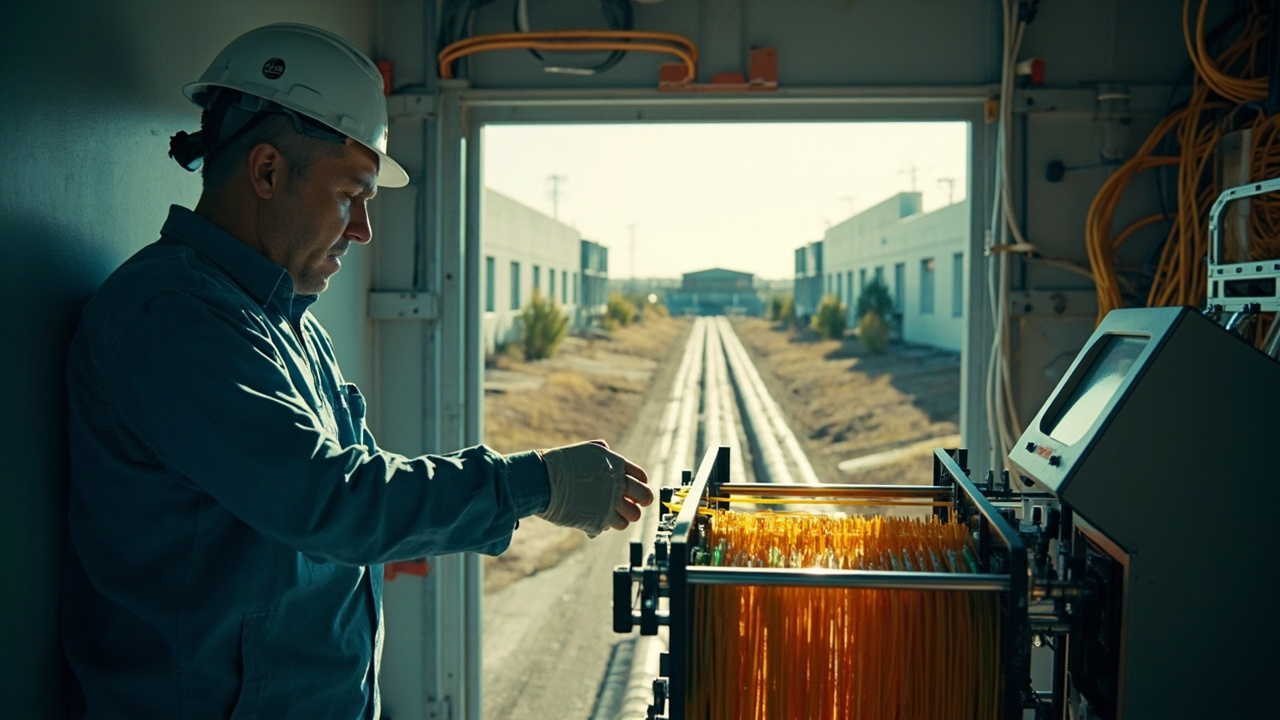
Fibre carries data as light and can support high-speed links over distances beyond the practical limits of permanent copper cabling. It is commonly used between buildings, floors, racks and industrial areas. Pacific can install fibre, perform fusion splicing and repairs, inspect and clean end faces, test with appropriate instruments and provide documentation for the completed link.
Fibre Optic Cabling and Long-Distance Networks · 2026-07-07 Which fibre type and network optics need compatibility confirmation?Fibre type, cores, optics, termination, test method, route and active equipment compatibility must be confirmed for the specific link. Pricing, availability, specifications, compatibility, lead times, service coverage and support arrangements can change, so decision-critical details should be confirmed directly with Pacific Telephone & Data.
Fibre Optic Cabling and Long-Distance Networks · 2026-07-06 What is involved in fusion splicing a fibre link?Fusion splicing joins prepared fibre ends using specialist equipment so light can pass through the joint with minimal loss. The work includes correct cable preparation, cleaving, splice protection, clean handling and placement of the completed splice in a suitable enclosure. Pacific can install fibre, perform fusion splicing and repairs, inspect and clean end faces, test with appropriate instruments and provide documentation for the completed link. The de…
 8 Q&A
Alarms Back-to-Base Monitoring and Integrated Security
 6 Q&A
Meeting-Room AV Smart Boards and Control Systems
 Topic
Pacific Telephone & Data Story and Local Experience
 14 Q&A
End-to-End Business Technology Integration
 10 Q&A
Technology Site Surveys and Accurate Quoting
After installation, fibre links are inspected, cleaned and tested with appropriate instruments to confirm continuity and performance. The testing method depends on the link and project requirements, and the results should be recorded so future faults can be compared with the installed baseline. Pacific can install fibre, perform fusion splicing and repairs, inspect and clean end faces, test with appropriate instruments and provide documentation for the co…
Fibre Optic Cabling and Long-Distance Networks · 2026-07-05 When should a business use fibre instead of copper cabling?Fibre is often recommended when a permanent copper run would exceed about 90 metres, when higher-capacity backbone links are needed or where electrical interference is a concern. Fibre carries data as light and can support high-speed links over distances beyond the practical limits of permanent copper cabling. It is commonly used between buildings, floors, racks and industrial areas.
Fibre Optic Cabling and Long-Distance Networks · 2026-07-05 Why is fibre useful in industrial or electrically noisy environments?The design should consider distance, required bandwidth, single-mode or multimode interfaces, cable route, mechanical protection, bend limits, connector type, splicing, equipment compatibility and future expansion. Pacific can install fibre, perform fusion splicing and repairs, inspect and clean end faces, test with appropriate instruments and provide documentation for the completed link.
 7 Q&A
New Office Fitouts and Workplace Technology
 10 Q&A
Project Coordination and Related Trades
 10 Q&A
Installation Quality Testing and Handover
 13 Q&A
Maintenance Fault Diagnosis and Technical Support
 8 Q&A
WHS SWMS and Work on High-Risk Sites
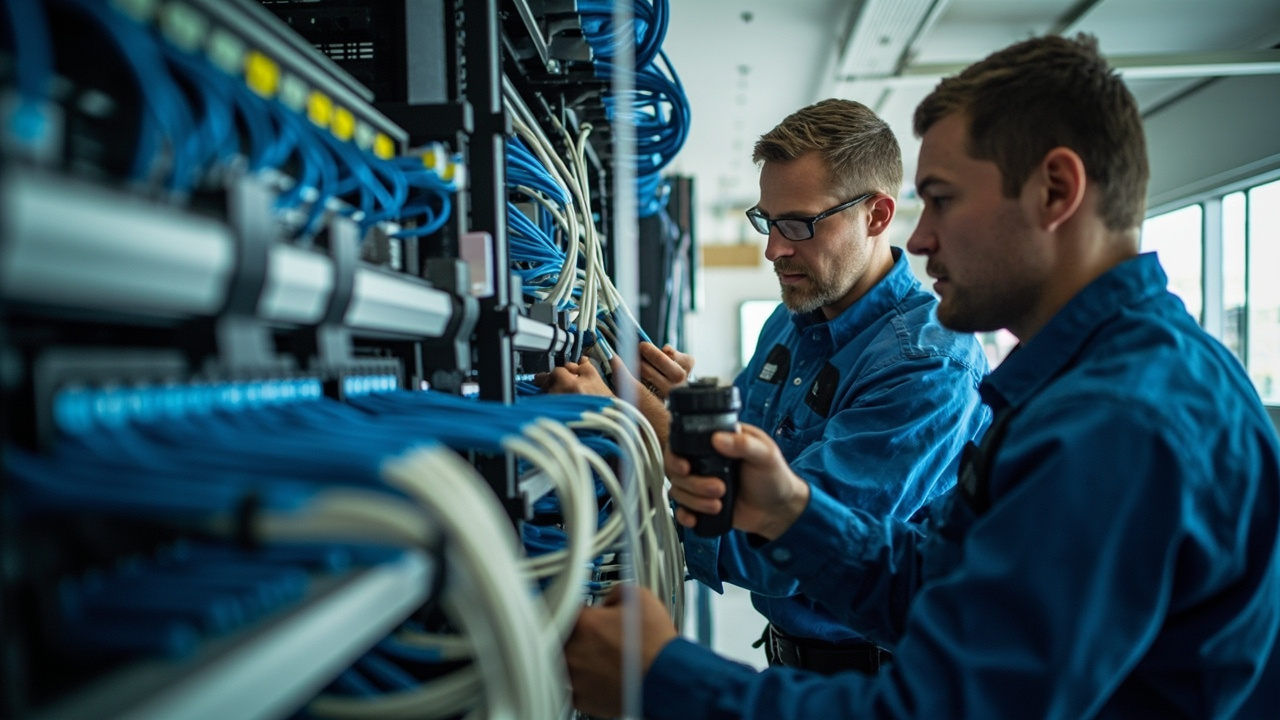
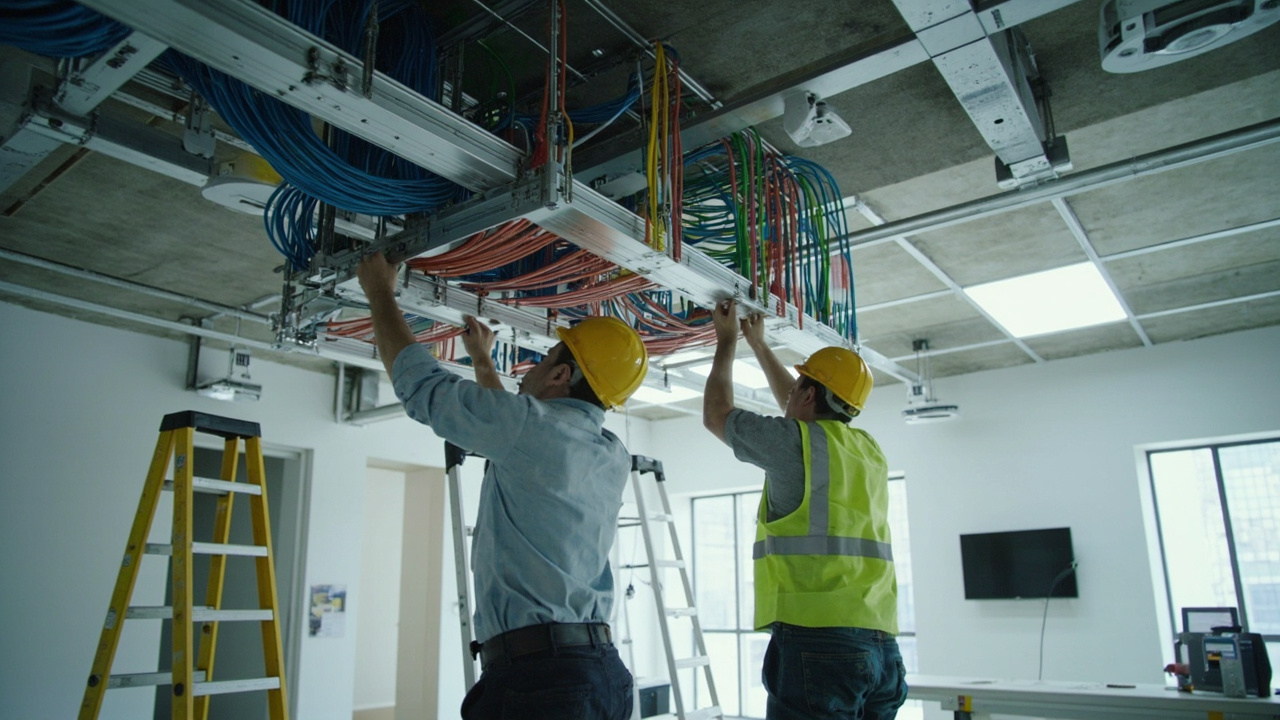
Poor termination, excessive length, tight bends, crushed cable, electrical interference, weak labelling and untested links can cause slow speeds or intermittent faults that are difficult to trace later. The design should consider cable length, pathway capacity, separation from electrical services, environmental exposure, bend and pulling limits, outlet locations, rack space, device density and likely future use.
CAT6 and CAT6A Structured Cabling · 2026-07-04 What should be confirmed before a cabling quote is accepted?The required category, outlet count, pathway, test standard, patching, active equipment and future capacity should be agreed before installation. Pricing, availability, specifications, compatibility, lead times, service coverage and support arrangements can change, so decision-critical details should be confirmed directly with Pacific Telephone & Data.
CAT6 and CAT6A Structured Cabling · 2026-07-03 When is CAT6A worth the additional installation cost?CAT6 suits many current business networks, while CAT6A can be selected where higher capacity, future demand or specific equipment makes the additional installation cost worthwhile. Structured cabling provides permanent, organised pathways between outlets, patch panels, racks and connected devices. Pacific does not install below CAT6 for new structured-cabling work and considers CAT6A when a 10-gigabit pathway is justified.